Gardening Honor Oak: Recycling and Sustainability
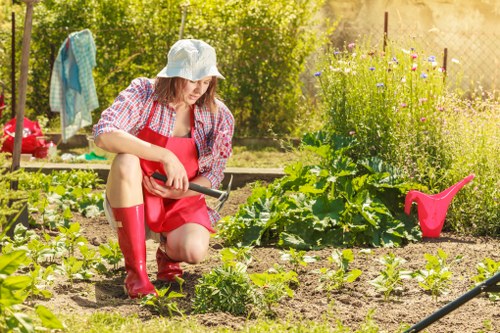 Gardening Honor Oak is committed to creating an eco-friendly waste disposal area and a thriving sustainable rubbish gardening area on site. Our approach balances practical on-the-ground recycling activity with ambitious targets and collaborative networks across neighbouring boroughs. We prioritise waste separation, composting, and the reuse of materials so that our garden spaces remain productive while reducing landfill contribution and lowering operational carbon emissions.
We have set a clear recycling percentage target: to achieve a 70% recycling and reuse rate for all site-generated waste by the end of 2027, with interim milestones of 55% by 2025. This target covers green waste, soil and compostable material, plastics and pots, wood, metals and any reusable equipment — an integrated metric for our eco-friendly waste disposal area and sustainable rubbish gardening area initiatives.
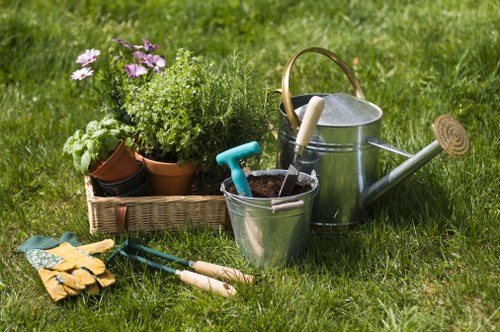 Our strategy aligns with local boroughs' approach to waste separation, which often encourages a three-stream system (food/organic, dry recycling and residual waste) alongside dedicated garden waste collections. We work within these frameworks so that leaf mulch, prunings and edible surplus are diverted to composting or community redistribution, while clean plastics and metal parts enter the dry recycling stream.
To deliver these outcomes we have developed partnerships with local transfer stations and recycling hubs. We regularly consolidate materials and make scheduled drops at borough transfer stations such as the Lewisham and Southwark transfer facilities and other municipal recycling centres nearby. These facilities accept segregated loads and ensure that green waste is treated for composting or anaerobic digestion while recyclables are prepared for downstream recycling.
Our on-site arrangements include clearly marked collection points in the garden and a compact eco-friendly waste disposal area designed to make separation simple for volunteers and staff. We use:
- Compost bays for woody prunings and food scraps;
- Designated containers for plastic pots and trays (cleaned and stacked for reuse);
- Secure storage for reusable timber, tools and metal that can be donated or sold.

Partnerships with Charities and Community Groups
We maintain active relationships with several charities and local social enterprises to maximise reuse and support vulnerable residents. These collaborations enable the transfer of surplus plants, compost and reclaimed materials to community gardens, food banks and training programmes. By channeling useful items away from landfill and toward charitable projects, our sustainable rubbish gardening area becomes a resource hub as much as a disposal point.Examples of collaborative activity
In practice, this looks like coordinated collections of plant pots and tools for reuse, sharing excess compost with community allotments, and offering seed and plant swaps that reduce the need for new packaging and retail purchases. We also partner with local reuse charities to accept gently used equipment, and with environmental NGOs for joint composting and biodiversity projects.We track the volumes given to charity partners as part of our recycling percentage target and report quarterly on progress. The result is a measurable reduction in the garden's residual waste, while supporting circular economy principles across Honour Oak and neighbouring communities.
Low-Carbon Logistics and Fleet
To reduce transport emissions associated with waste movement, Gardening Honor Oak operates a growing fleet of low-carbon vans and utility vehicles. Our logistics plan favours electric vehicles (EVs) and efficient hybrid vans for routine transfers to local transfer stations, and we use route optimisation software to minimise mileage.For short-distance runs, especially within residential streets and market areas, we employ cargo bikes and hand carts where feasible. This helps lower the carbon footprint of our sustainable rubbish gardening area while also improving neighbourhood access to reuse initiatives and plant distribution points.
 Operationally, vehicles are maintained to maximise fuel efficiency, and we prioritise scheduling that enables consolidated loads to transfer to borough recycling hubs in single trips rather than multiple partial journeys. These steps cut both emissions and operational costs, amplifying the sustainability gains of our recycling activities.

Monitoring, Reporting and Community Engagement
We publish annual summaries of waste streams, recycling percentages and carbon reductions achieved through better sorting, composting and low-carbon transport. Metrics include tonnes of green waste composted, number of pots reused, volumes diverted to charities and percentage reduction in residual waste. We also run educational sessions (without being a how-to guide) and visible signage that reinforce the boroughs' waste separation systems.Key ongoing actions include regular audits of our bins and compost bays, scheduled liaison with transfer station operators to streamline drop-offs, and continuous expansion of partnerships with local charities and reuse networks. Our ambition is for Gardening Honor Oak to be a model of a low-impact, community-focused sustainable rubbish gardening area that other urban green spaces can replicate.
By combining a 70% recycling and reuse target, smart use of borough transfer stations, strong charity partnerships and a low-carbon van fleet, Gardening Honor Oak creates an effective, resilient eco-friendly waste disposal area. This approach not only reduces landfill and emissions, it keeps valuable organic matter and materials in play for future seasons of planting, learning and neighbourhood benefit.